

Your Guide to the Top 10 Marketing Materials and Their Examples
Why Marketing Materials Are the Foundation of Small Business Growth
10 marketing materials every small business should have include: business cards, brochures and flyers, branded apparel and swag, direct mail postcards, a website with landing pages, email newsletters, social media content, blog posts, case studies and testimonials, and online ads with lead magnets. These tools work together to build brand awareness, generate leads, and drive sales.
Marketing materials are the tools you use to promote your business and connect with customers. They range from the business card you hand out at a networking event to the email newsletter you send every month. Some are print, some are digital, but all serve the same core purpose: to help people understand what you do, why it matters, and how to work with you.
For small businesses, these materials do more than just advertise. They build trust. They keep you top of mind. They turn strangers into leads and leads into customers. Without them, you're invisible. With the wrong ones, you waste time and money. With the right ones, you create a system that works for you around the clock.
Marketing collateral and advertising are not the same thing. Collateral informs and educates. It shows up after someone has shown interest. A brochure, a case study, or a landing page helps move that person forward. Advertising, on the other hand, grabs attention. It interrupts. It announces. Both are important, but they play different roles in your marketing system.
The challenge for most business owners is knowing where to start. You don't need every marketing material that exists. You need the ones that fit your goals, your audience, and your budget. And you need them to work together, not in isolation.
I'm Sam McKinney, and I've spent over 15 years helping businesses build marketing systems that actually deliver results. I've seen how the right mix of 10 marketing materials can transform a business's visibility and lead generation. The key is understanding what each piece does and how they all fit together.
How to Choose the Right Marketing Materials for Your Business
Choosing the right marketing materials for your business starts with strategy, not just a list of cool ideas. We often see businesses jump straight to tactics without a clear plan, which can lead to wasted effort and budget. Instead, we encourage our clients in the East Metro and St. Croix Valley to begin by defining their goals. Are you aiming for broad brand awareness, generating specific leads, or driving in-store sales? Your objectives will dictate which materials are most effective. For instance, if increasing in-store sales is the goal, personalized postcards with clip-out coupons can be a great option.
Next, it is crucial to understand your target audience. Who are you trying to reach? What are their demographics, their preferences, and their pain points? As marketing professionals, we know that if you do not understand the needs of your target audience, you cannot effectively sell to them. Tailoring your message and chosen materials to resonate with your audience is paramount. For example, if your audience is tech-savvy, a dark-themed landing page might appeal to their aspirations.
Finally, align your choices with your budget and integrate them into your overall marketing system. The U.S. Small Business Administration recommends investing 7-8% of revenue in marketing, but this can vary. Rather than spreading your budget too thin across many mediocre materials, focus on a few high-impact items that you can execute exceptionally well. A small collection of quality marketing collateral is always more impactful than a large quantity of cheap ones. Your marketing plan should be a living document, regularly evaluated and adapted based on performance, ensuring your chosen materials consistently contribute to your business growth.
The Top 10 Marketing Materials for Small Business Growth
A balanced marketing plan uses a mix of print and digital tools to connect with customers at every stage of their journey. Here are the ten foundational pieces we see deliver the best results for local businesses.
Print Options Among the Top 10 Marketing Materials
1. Business Cards
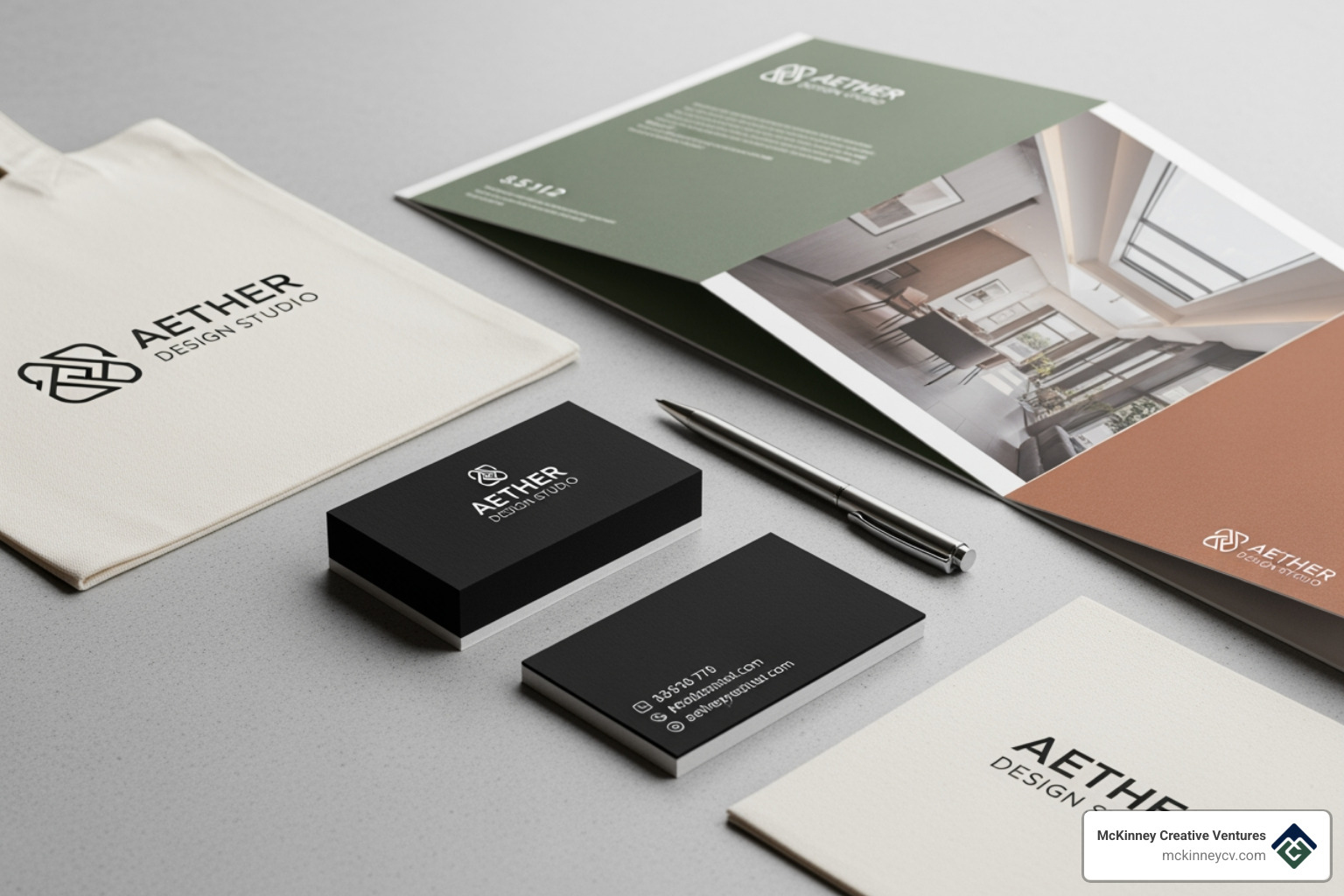
Even in our digital world, a well-designed business card remains a powerful networking staple. It is a physical representation of your brand and often creates a memorable first impression. Business cards are an easy and less expensive way to get your name out there, especially for local businesses in areas like Woodbury, Stillwater, or Hudson.
Modern business cards go beyond just contact information. They can incorporate QR codes, which are nifty little squares that connect print materials with digital experiences. When scanned, a QR code can direct someone to your website, a specific landing page, or even beam your contact details straight to their phone using tap-to-connect technology. This blend of physical and digital engagement shows thoughtfulness and care, enhancing the overall experience. A tastefully designed business card can truly do wonders in portraying your brand’s personality and professionalism.
For more on QR codes, you can explore this resource: More on QR codes.
2. Brochures and Flyers
Brochures and flyers are versatile print materials that allow you to share more detailed information than a business card. Flyers are excellent for quick announcements or event promotions, such as a special offer at your Lake Elmo shop or a community event in River Falls. They are designed to be eye-catching and instantly recognizable.
Brochures, on the other hand, offer more space for storytelling. They can serve as a compact tour of what your business offers, blending compelling content with design elements. They allow you to share lengthier and more nuanced information, like a detailed service list for your St. Paul consulting firm or product specifications for your Maple Grove retail store. In a technology-heavy world, receiving a physical item can be a "physiological delight," and it is less likely to get lost than digital information. Using high-quality paper and engaging visuals ensures your brochures and flyers stand out in a pile of mail or at an in-store display.
For a deeper dive into how brochures can serve as a compact tour of your business, refer to this guide: A compact tour of your business.
3. Branded Apparel and Swag
Branded apparel and promotional products, often referred to as "swag," are fantastic for turning customers and employees into walking brand advocates. T-shirts are a popular choice because people like them, making it easy and fun to get your brand out there. Similarly, tote bags are a popular marketing material because they can be used over and over again, offering repeated exposure for your brand.
Beyond apparel, practical items like pens, mugs, notepads, or even promotional drinkware can be highly effective. Promotional pens, for example, are accessible, affordable, and commonly used, ensuring your brand is seen daily. The key to effective swag is choosing items the recipient will actually use, rather than a one-off trinket. This builds community and keeps your brand top of mind. For businesses in the East Metro, providing branded items at local events or as customer rewards fosters a strong connection within the community.
4. Direct Mail Postcards
In an increasingly digital landscape, direct mail postcards offer a tangible way to reach your local audience, particularly for targeted campaigns in specific neighborhoods in Cottage Grove, Afton, or Bayport. Personalized postcards, especially when paired with QR codes or unique URLs, regularly boost response rates by 20-30% compared to generic mailers. This is because variable data printing (VDP) allows us to swap images, offers, and copy on every postcard so each recipient feels like it was designed just for them.
Direct mail can build trust and authenticity. A postcard, even from a business, can make an individual feel important and remembered, particularly if it includes a handwritten note or a special offer. For increasing in-store sales, postcards with clip-out coupons are a great option, providing a clear call to action and measurable results. Folded self-mailers (FSMs) combine the storytelling power of a brochure with the simplicity of a postcard, making them a versatile tool for local marketing campaigns.
Digital Tools in Your Kit of 10 Marketing Materials
5. Website and Landing Pages
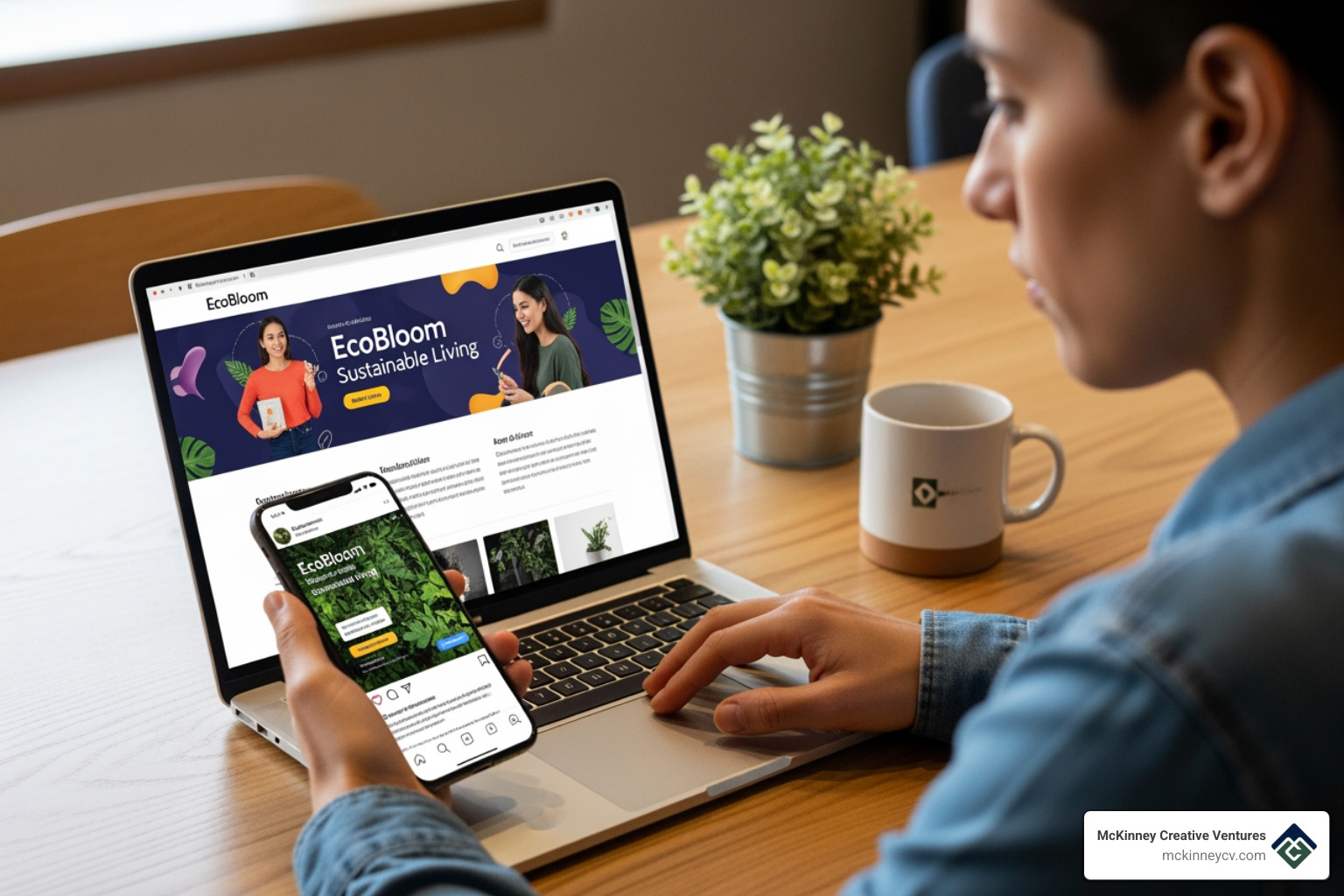
Your website is your digital storefront and the central hub for all your online marketing efforts. It establishes credibility, provides essential information, and allows customers to interact with your business 24/7. A well-designed, easy-to-steer, and responsive website is crucial, especially since 63% of consumers prefer to find information about brands and products on mobile devices, and most marketers report that mobile devices account for over half of their annual traffic. Your website should mirror your brand identity and provide helpful information, like contact details, pricing, and service descriptions.
Beyond your main website, campaign-specific landing pages are vital. A landing page should be clear, concise, and informative, with a solid call to action, focusing on a single marketing message. They are distinct from a general homepage and excel at converting traffic into paying customers. For local businesses, driving traffic from your Google Business Profile to optimized landing pages can significantly boost your local SEO efforts and lead generation. A personalized landing page can even make PPC ad campaigns 5% more effective.
For more information on optimizing your local presence, consider exploring resources on Google Business Profile.
6. Email Newsletters
Email newsletters provide a direct line to your audience’s inbox, making them an incredibly powerful tool for nurturing leads and building lasting customer relationships. They are a recurring form of content marketing that keeps your brand top of mind. Email marketing is one of the most effective channels for driving conversions, boasting a 2.8% conversion rate for B2C brands and 2.4% for B2Bs.
We find that well-designed email marketing templates, aligned with your brand, are crucial for ensuring customers read your messages. Segmented emails drive 30% more opens and 50% more clickthroughs than unsegmented ones, highlighting the importance of personalization. Over half of small business owners use email marketing as their most frequent strategy for finding new and retaining repeat customers. With 41% of email views coming from mobile devices, ensuring your emails are mobile-friendly is essential for reaching customers in the East Metro and St. Croix Valley.
To understand more about email marketing, you can check out this resource: direct line to your audience’s inbox.
7. Social Media Content
Social media is where your customers are. With billions of people on social media globally, it is an integral part of business success. High-quality social media graphics and engaging content allow you to showcase your brand personality, build community, and connect with customers on a deeper level. Short-form video is currently the most leveraged media format by marketers, and video ads performed best on Facebook as of 2023. However, it is important to remember that videos tend to perform better on certain platforms while static images do better on others.
Platforms like Facebook, Instagram, and LinkedIn offer unique opportunities for businesses in our local areas. For example, 40% of Gen Z have finded new products on social media in the past three months, and 41% say it is their preferred channel for findy. Building an active online community is crucial, with 90% of social media marketers agreeing this is key to a successful strategy. We help businesses develop platform-specific strategies to maximize engagement and reach within their target demographics.
For insights into video ad performance, this resource is helpful: Video ad performance.
8. Blog Posts
A well-maintained blog is an invaluable asset for building your brand's authority and demonstrating expertise. It allows you to answer customer questions, offer valuable information, and build trust without directly selling. Content is still one of the leading ways to ensure a brand reaches a broader audience through SEO. By optimizing on-page content based on keywords, businesses can significantly improve their search engine rankings.
We have seen how a strategic blog can drive organic traffic to your website, attracting potential customers who are actively searching for solutions you provide. The average blog post length is 1,400 words, indicating a preference for in-depth, informative content. Moreover, 75% of marketers believe that AI-enabled search engines will positively impact their blogs, predicting increased site traffic. For local businesses, blogging about community events, local partnerships, or industry insights specific to the East Metro Twin Cities or St. Croix Valley can further improve local SEO and establish you as a trusted local resource.
9. Case Studies and Testimonials
In marketing, people trust people. Case studies and testimonials are powerful forms of social proof that build credibility and overcome objections by showcasing real-world results. If you can show potential customers that others like them have had a positive experience with your brand, they are more likely to trust you. This is especially true given that 96% of prospects report doing their own research before speaking with a human sales representative.
Case studies provide a detailed account of how your product or service solved a client's problem, outlining the steps taken and the positive outcomes achieved. Users who read a compelling case study are often further down the sales funnel and ready to engage. Testimonials, whether written or video-based, offer direct endorsements from satisfied customers. We encourage our clients to actively collect and display these stories of success, as they demonstrate why your brand is a reliable choice and instill confidence in potential customers.
10. Online Ads and Lead Magnets
Online ads, including display ads and pay-per-click (PPC) campaigns, are incredibly valuable for targeted reach and keeping your business top of mind. Running display ads and having a retargeting campaign in place gives potential customers the impression that your business is everywhere in the online space, inspiring a sense of trust. With effective optimization, PPC advertising can yield average returns of $2 for every $1 spent, a 200% ROI.
Complementing online ads are lead magnets, which are designed to generate leads by offering valuable, free downloadable content in exchange for a reader's email address. These can include ebooks, checklists, guides, or templates. Ebooks and guides should be supportive, actionable, and useful, positioning your brand as an expert. We find that 74% of marketers say content marketing, which includes lead magnets, helps generate demand and leads. A well-designed landing page for your lead magnet will help your business stand out and bring in new customers, growing your email list for future nurturing.
Creating a Cohesive Brand Across All Your Materials
Creating a cohesive brand identity across all your marketing materials is non-negotiable for small businesses aiming for long-term success. Why? Because consistency builds recognition, and recognition builds trust. When your brand looks and feels the same everywhere—from your website to your business card to your social media posts—it projects professionalism and reliability.
We guide our clients through defining key brand elements:
Logo: This is the face of your business. A well-designed logo is a vital step towards crafting an established brand identity and boosts recognition. We believe investing in a professional logo design is crucial.
Color Palette: Your brand colors evoke specific emotions and associations. Using a consistent palette across all materials helps create a strong visual identity.
Typography: The fonts you choose contribute to your brand's personality. We generally recommend no more than two font styles: a script font for headlines to get noticed, and a sans-serif font for longer text, as it is easier to read.
Brand Voice: This defines how your business communicates. Is it friendly, authoritative, playful, or professional? Maintaining a consistent voice across all content, from blog posts to social media captions, reinforces your brand's personality.
The creation process for marketing collateral involves several key steps. First, we develop a clear concept: what is the purpose of this material, what message should it send, and what goals should it achieve? Next, we move into design and copywriting, ensuring that both visual elements and written content align with the brand guidelines. Finally, a thorough review and approval stage ensures that all stakeholders are satisfied and the material is polished and effective before it goes out into the world. This systematic approach ensures strong design and brand cohesion, presenting your business as attractively, professionally, and cohesively as possible.
How to Measure the Effectiveness of Your Marketing
Measuring the effectiveness of your marketing materials is essential for understanding what works, what does not, and how to optimize your efforts. We believe that if you cannot measure it, you cannot manage it.
For print materials, tracking can involve:
QR Code Scans: By including unique QR codes on postcards or flyers, you can track how many people scan them and where they are directed.
Unique Coupon Codes: Offering specific coupon codes in print ads allows you to attribute sales directly to that campaign.
Dedicated Phone Numbers or URLs: Using a phone number or web address unique to a print campaign helps track inbound inquiries. Personalized postcards paired with QR codes or unique URLs regularly boost response rates by 20-30% versus generic mailers.
For digital materials, measurement is often more direct:
Website Analytics: Tools like Google Analytics provide insights into website traffic, user behavior, and conversion rates. The average website has a bounce rate of 37% and an SEO click-through rate of 13%.
Email Open and Click Rates: Marketers report that segmented emails drive 30% more opens and 50% more clickthroughs than unsegmented ones. Clickthrough rate is often the number one metric for email campaign success.
Social Media Engagement: We track metrics like reach, likes, shares, comments, and follower growth to understand audience interaction.
Ad Conversion Rates: For online ads, we closely monitor conversion rates and return on investment (ROI). With effective optimization, pay-per-click (PPC) advertising can yield average returns of $2 for every $1 spent.
Businesses can more easily target their marketing efforts to specific demographics and track the results of their campaigns using digital marketing materials. The goal is to connect these metrics back to your initial business goals. By regularly reviewing performance, asking customers how they found you, and monitoring changes in traffic or conversions after distributing materials, you can continually refine your marketing strategy. This data-driven approach ensures your marketing system is always improving and delivering tangible results for your business in the East Metro and St. Croix Valley.
Frequently Asked Questions about Marketing Materials
What is the difference between marketing collateral and advertising?
This is a common question, and understanding the distinction is key to effective marketing. Marketing collateral refers to any marketing material or media that provides information about a product or service but is not directly an advertisement. It is designed to show brand authority, establish legitimacy, and foster trust. Think of a brochure that explains your services in detail, a case study showcasing client success, or a well-crafted "About Us" page on your website. These materials aim to inform and educate a prospective client who has already shown some interest.
Advertising, on the other hand, is primarily about grabbing initial attention and driving awareness. It is often interruptive and designed to make a broad announcement, like a radio commercial, a billboard, or a social media ad. While both are vital components of a comprehensive marketing strategy, collateral works to deepen engagement and build trust, while advertising focuses on making the initial connection. We help our clients create both, ensuring they work in harmony within a cohesive marketing system.
What are some emerging trends in marketing materials?
The marketing landscape is always evolving, and several exciting trends are shaping the future of marketing materials:
Hyper-personalization: Leveraging data to tailor content, offers, and even images to individual recipients. Variable data printing (VDP) for print materials and dynamic content for digital assets are key here.
Omni-channel Integration: Seamlessly blending print and digital experiences. This often involves QR codes that link physical materials to digital content, or NFC-enabled business cards that beam information directly to a phone. Augmented reality (AR) overlays can even turn static pages into interactive video demos or 3D product spins, with engagement skyrocketing and bounce rates dropping.
Sustainability: With growing environmental consciousness, businesses are increasingly opting for eco-friendly materials. Using post-consumer stock, soy inks, and minimalist design in print materials delights customers while reinforcing environmental values.
AI-Powered Customization: Artificial intelligence is enabling more efficient and effective personalization of marketing materials, from generating content ideas to optimizing ad copy.
Interactive Print: Moving beyond static pages, interactive print uses scannable content and AR to create memorable and engaging experiences.
We stay on top of these emerging trends to ensure our clients in the East Metro and St. Croix Valley can leverage the most innovative and impactful strategies to reach their audiences.
How can a small business create professional materials on a limited budget?
Creating professional and effective marketing materials on a limited budget is entirely achievable for small businesses. It requires a strategic approach and a focus on quality over quantity.
Here are our top recommendations:
Start with a Strong Logo: Your logo is your most important visual asset and the foundation of your brand identity. Invest in a professionally designed logo, as it will appear on everything you create.
Leverage Templates: For other materials like social media posts, flyers, or email newsletters, use high-quality design templates. Tools like Canva offer extensive libraries that can be customized with your brand colors and logo.
Focus on Key Materials: Instead of trying to create every type of marketing material at once, identify the 2-3 most impactful ones for your specific goals and target audience. For instance, business cards, digital flyers, and social media templates are often low-cost, high-impact tools.
Prioritize Your Website: A simple but well-designed website offers long-term value and is crucial for credibility. You do not need an elaborate, expensive site to start; focus on being clear, easy to steer, and mobile-friendly.
Re-purpose Content: Maximize your content by re-purposing it across different channels. A blog post can become a series of social media updates, an infographic, or a section of an email newsletter.
Consider Fractional Support: For consistent, professional results without the overhead of an in-house team, consider a fractional marketing team like McKinney Creative Ventures. We provide affordable, ongoing support for design and content creation, ensuring your materials are always professional and aligned with your brand, perfect for businesses in the East Metro Twin Cities and St. Croix Valley.
Conclusion: Putting Your Marketing System to Work
Building a thriving business in today's competitive landscape requires more than just a great product or service; it demands a robust and integrated marketing system. The strategic mix of 10 marketing materials we have discussed, encompassing both print and digital elements, is essential for sustainable growth. The true power lies not just in having these materials, but in how they work together, consistently telling your brand story and guiding your customers through their journey.
We believe in strategy before tactics, in systems and automation over one-off efforts, and in long-term, sustainable growth. As your fractional marketing team, McKinney Creative Ventures helps small businesses in the St. Croix Valley and East Metro develop and execute these very strategies. We provide the affordable, consistent support you need for SEO and content creation, ensuring your marketing efforts are always professional, impactful, and delivering real, measurable results. To learn more about building a strong marketing foundation custom to your business, visit our website.