

Marketing Math: What's the Real Cost for Your Small Business?
Your Guide to Smart Marketing Spending
The cost of marketing for small business typically ranges from $2,500 to $12,000 per month for digital efforts, though this varies widely based on your industry, goals, and business stage. Here's what you need to know:
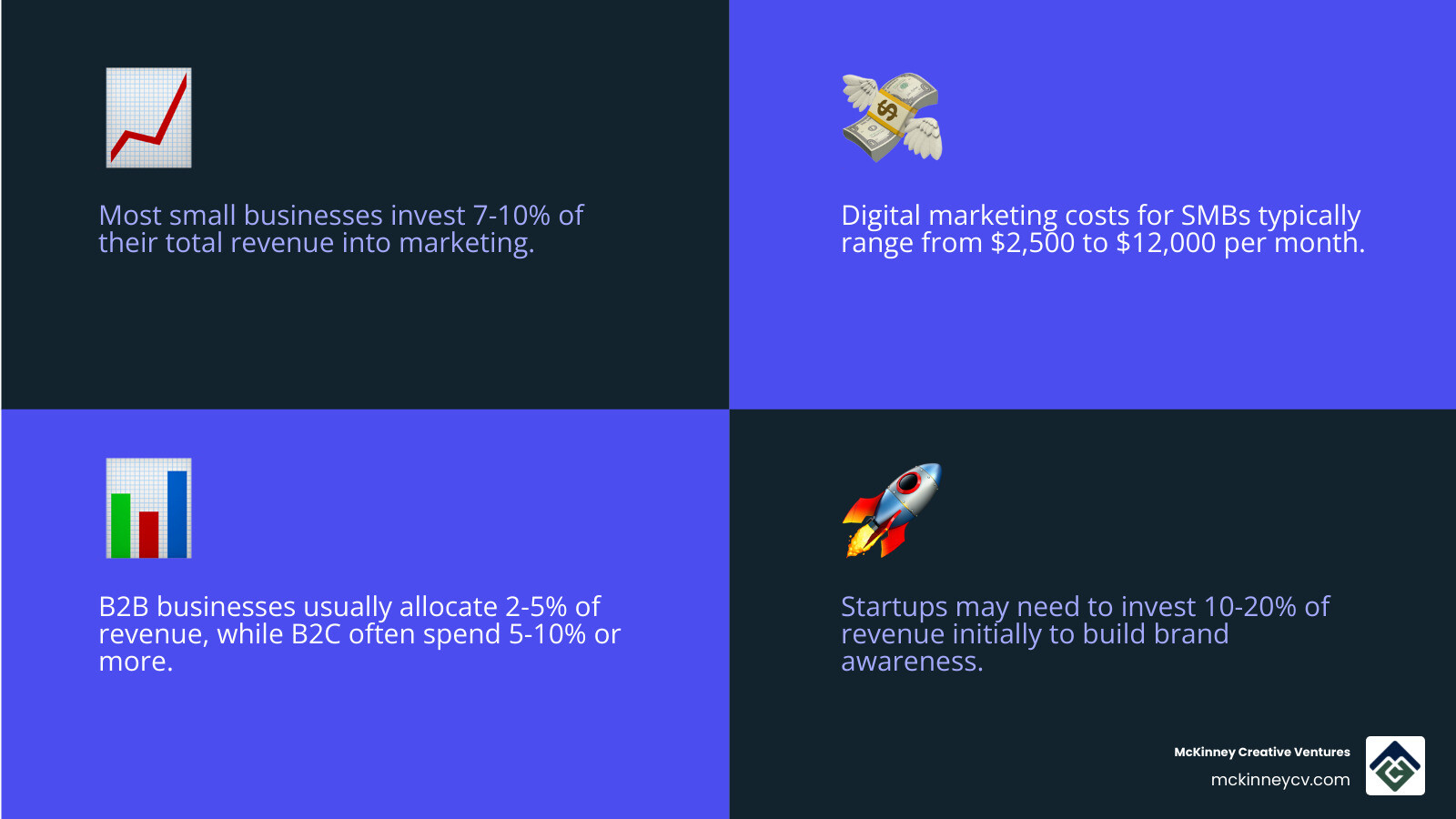
Average spend: Most small businesses invest 7-10% of their total revenue into marketing
B2B businesses: Usually allocate 2-5% of revenue to marketing
B2C businesses: Often spend 5-10% or more of revenue on marketing
Startups: May need to invest 10-20% initially to build awareness
Annual range: Around 55% of small businesses spend less than $50,000 per year on marketing
If you're a small business owner trying to figure out how much to budget for marketing, you're probably feeling overwhelmed by conflicting advice and wildly different price tags. The truth is simpler than most marketing agencies want you to believe.
There's no magic number that works for every business. Your marketing budget should reflect your specific goals, your industry competition, and where your customers actually spend their time. A local service business competing for the same keywords as national chains will need a different strategy than a niche B2B company targeting a specific audience.
The real question isn't just how much to spend. It's where to spend it and how to measure whether it's working.
I'm Sam McKinney, and I've spent over 15 years helping businesses build marketing systems that actually generate results, not just activity. I've seen how the cost of marketing for small business can range from highly efficient investments to expensive mistakes, and I'll show you how to stay on the right side of that line.
The Big Picture: How Much Do Small Businesses Spend on Marketing?
When we talk about the cost of marketing for small business, we often start with percentages of revenue. While these are good benchmarks, it is essential to understand the nuances behind them. Many small businesses aim to spend 2% to 5% of their total revenue on marketing, but this can climb significantly. Marketers reported a 10.4% growth in spending recently, which shows just how dynamic this area can be. Overall, marketing budgets as a percent of total budgets are around 11.7%.
For small to mid-size businesses (SMBs), the average digital marketing cost can range from $2,500 to $12,000 per month. This means many businesses in our local East Metro Twin Cities and St. Croix Valley communities are investing substantial amounts into their online presence. In fact, roughly 55% of SMBs spend less than $50,000 per year on marketing, highlighting the wide spectrum of investment levels.
Business Model Differences in Marketing Spend
The type of business you operate heavily influences your marketing spend.
B2C (Business-to-Consumer) companies generally allocate more to marketing. For product companies, this might be around 9.6% of revenue, and for service companies, it can be as high as 11.8%. This higher allocation often stems from the need to build widespread brand awareness and reach a larger, often more diverse, customer base. Unlike B2B, B2C often lacks a dedicated sales team, so marketing carries the full weight of attracting and converting customers. The customer journey for B2C is typically shorter and more emotionally driven, requiring consistent, broad-reaching marketing efforts to capture attention.
B2B (Business-to-Business) companies, on the other hand, typically spend less, often in the 2-5% range of their revenue. This is because B2B sales cycles are usually longer and involve more complex decision-making processes, often supported by a sales team that handles direct outreach and relationship building. Marketing in a B2B context focuses more on lead generation, thought leadership, and supporting the sales process rather than direct consumer conversion.
Industry Averages and Your Business Stage
Your industry and your business's current stage also play a significant role in determining your marketing budget.
Industry benchmarks vary dramatically. For instance, consumer packaged goods companies might spend as much as 18.09% of their revenue on marketing, while energy companies might spend around 3.21%. Retailers often spend about 4%, while restaurants might be closer to 1.93%. Understanding these industry norms helps us gauge if our spending is competitive.
Budgeting for new businesses requires a different approach. Startups and businesses just entering the market, whether in Stillwater, Hudson, or Woodbury, need to budget more aggressively to establish brand awareness and attract their initial customer base. This initial investment can be higher, sometimes 10-20% of projected revenue, to make a strong impact.
As your business moves into a growth phase, we might increase our marketing spend to 10-14% of revenue. This helps us expand our market position and capture a larger share. Once established and in a maintenance mode, a budget of 6-9% of revenue is often sufficient to maintain our current standing and customer base. However, if we see competitors increasing their spend or new market opportunities arise, we might adjust upwards.
Local competition in areas like the East Metro Twin Cities and St. Croix Valley means we need to stay vigilant. If the market is saturated, we might need a higher budget to stand out.
How to Build Your Marketing Budget from the Ground Up
Building a marketing budget isn't about pulling a number out of thin air. It is a strategic process that aligns with our overall business objectives. We always start with strategy, not just a dollar amount. This ensures every dollar we spend contributes to our growth in a meaningful way.
Start with Your Business Goals, Not a Dollar Amount
Before we allocate any funds, we need to clearly define what we want to achieve. What are our goals? Do we want to serve as many customers as possible? Would we like to hire and scale? Do we want to maintain our steady stream of income simply? The answers to these questions will determine our total budget.
We find the most effective approach is to set SMART goals: Specific, Measurable, Achievable, Relevant, and Time-bound.
Specific: Instead of "get more customers," we might aim to "increase leads by 15%."
Measurable: We define clear metrics, like "increase website traffic by 20%."
Achievable: Our goals should be realistic given our resources and market conditions.
Relevant: Each marketing goal should directly support our overarching business objectives.
Time-bound: We set deadlines, such as "increase online sales by 20% within the next 12 months."
By defining these goals upfront, we can then work backward to determine the marketing activities and associated costs necessary to reach them. This might include defining specific lead generation targets, setting clear revenue goals, building brand visibility in our local communities, or planning for customer retention programs.
Understand the Factors That Drive Your Budget
Several factors unique to our business and operating environment in the East Metro and St. Croix Valley will drive our marketing budget.
Business stage: As we discussed, a startup in Hudson, WI, will have different needs than an established business in Minneapolis, MN. Startups need to invest more in awareness, while established businesses might focus on retention or market expansion.
Local competition: The competitive landscape in our service areas, from Woodbury to River Falls, directly impacts how much we need to spend to get noticed. If our competitors are heavily investing in digital ads or local sponsorships, we may need to match or exceed that effort to capture attention.
Growth ambitions: Do we want to maintain our current pace, or are we aiming for aggressive expansion? Higher growth targets naturally require a larger marketing investment.
Profit margins: Our product or service's profit margins dictate how much we can realistically afford to spend to acquire a customer while remaining profitable.
Seasonality: Many local businesses experience seasonal fluctuations. Our budget needs to account for peak seasons (e.g., holiday marketing) and slower periods, potentially shifting spend to maintain visibility or prepare for the next busy spell.
Key Components That Affect the Cost of Marketing for a Small Business
Understanding the fundamental components that influence our marketing spend helps us build a more accurate budget.
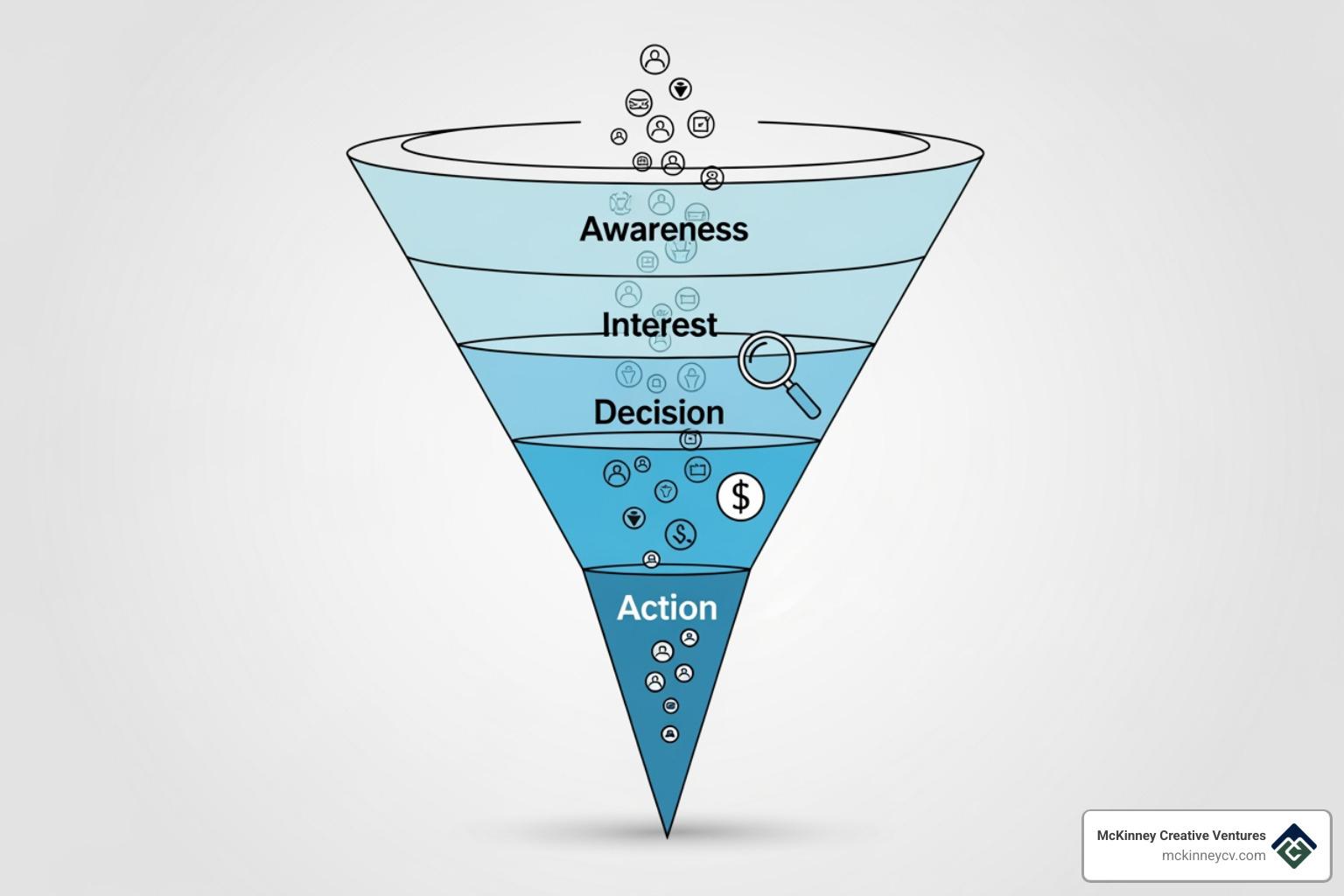
Our sales funnel is critical to our marketing budget because it determines where we will spend our money. This is the process our audience goes through to become a paying customer. Marketing efforts need to support each stage:
Awareness: Getting potential customers in the East Metro or St. Croix Valley to know we exist.
Consideration: Helping them understand how our products or services solve their problems.
Decision: Convincing them to choose us over competitors.
Action: Guiding them through the purchase or conversion process.
Our target customer profile is another key element. Who is our target customer, and where do they spend their time? How much effort will it take to get in front of them? The answers to these questions help us consider how much we’ll need to spend. For example, marketing to a niche B2B audience in St. Paul might require focused LinkedIn ads and industry-specific content, while reaching B2C customers in Cottage Grove might involve local Facebook ads and community event sponsorships.
Our geographic location is particularly important for us. For local businesses in our service areas, strategies like local SEO and community outreach are paramount. A business relying on nearby customers should create profiles in online directories that help people find local businesses. Starting with our free business profile on Google, we can expand to Superpages, MerchantCircle, eLocal, EZlocal, Yellowpages, and CitySearch.
Finally, whether we offer a product or service model influences our marketing mix. Product-based businesses might invest more in e-commerce marketing and visually rich social media, while service-based businesses might prioritize content marketing, testimonials, and professional networking.
What Goes Into the Cost of Marketing for a Small Business?
Marketing costs can consume a large part of our small business budget. Recent research shows that small businesses spend an average of $10,000 to $12,000 annually on marketing. This could be anywhere from 5% to 20% of annual revenue, depending on our size and industry. So, what does this include?
Essential Digital Marketing Investments
Digital marketing has become a critical component of modern advertising, with US businesses spending $270 billion last year, projected to reach $450 billion by 2028.
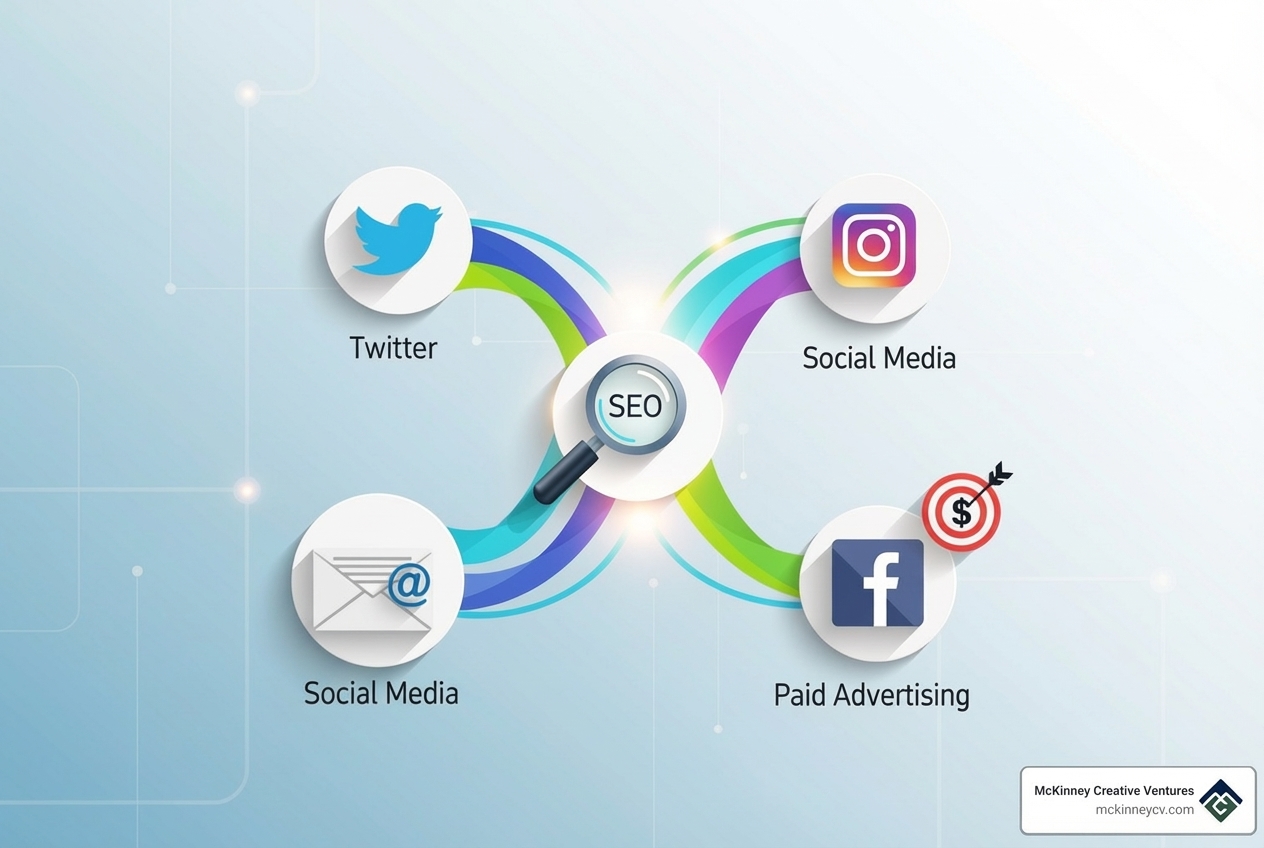
Search Engine Optimization (SEO): This is a long-term strategy that helps our website rank higher in search results. It involves placing keywords customers use throughout our site when searching for what we sell. While free tools like Google Analytics and Google Keyword Planner are helpful, effective SEO often requires ongoing effort. For most small businesses that get the most value for their money, we're looking at spending between $1,000 and $3,000 per month for competitive SEO services.
Paid Advertising (PPC): PPC (Pay-Per-Click) ads are paid advertisements at the top of search results pages and on other web pages. These ads allow us to reach more leads that are ready to convert quickly. Costs can vary widely, from $100 to $10,000 per month or more, depending on competitiveness and ad spend. For effective Google Ads campaigns, a minimum of $1,000 a month investment is often suggested.
Social Media Marketing: We don't need a social presence everywhere; we focus on the social channels our target audience and competitors use most. Instagram, Facebook, LinkedIn, Twitter (now X), and TikTok let us create free business profiles. However, to truly stand out and overcome dismal organic reach, paid social media advertising and content creation resources are often necessary. Monthly costs can range from $100 to $5,000.
Content Creation: This involves creating valuable and relevant content like blog posts, videos, and images that attract and engage our target audience. Charlie Southwell, a marketing director at Technically Write IT, notes that creating unique content is expensive, so repurposing everything we create is a smart strategy. Short-form video, images, and live streaming are currently delivering the highest ROI among marketing formats.
Email Marketing: Email and text message marketing let us instantly communicate with customers about upcoming sales, events, and news. Platforms like Mailchimp, Constant Contact, and Campaigner are popular email marketing solutions. Costs typically range from $50 to $1,000 per month, depending on list size and features.
Offline Marketing and Internal Costs
While digital marketing dominates, offline marketing still holds value, especially for local businesses in our communities.
Print materials: Business cards, letterhead, postcards, brochures, stickers, and retail packaging can be essential for local branding. Sources like GotPrint and VistaPrint offer affordable options. Direct mail services like USPS Every Door Direct Mail can be effective for reaching local households.
Local events and sponsorships: Participating in community events, sponsoring local teams, or hosting workshops in places like Stillwater or Cottage Grove can build strong local connections and brand loyalty.
Employee time: If we handle marketing in-house, the salaries or allocated time of our team members represent a significant cost. Mark Prince of Accenture explains that an in-house agency can be an investment that leads to cost savings.
Marketing tools and software: Beyond the direct campaign costs, we need to budget for various tools, such as CRM software, website builders (HostGator, Shopify, Wix), SEO tools (Ahrefs, Semrush), and social media management platforms (Buffer, Hootsuite).
Estimating the Cost of Marketing for a Small Business
To give us a clearer picture, here's a general comparison of common marketing channels, their typical monthly cost ranges for small businesses, and their primary goals:
Marketing Channel Typical Monthly Cost Range (SMB) Primary Goal Search Engine Optimization (SEO) $1,000 - $3,000 Long-term organic traffic, authority, brand visibility Paid Advertising (PPC) $100 - $10,000+ Immediate leads/sales, targeted reach Social Media Marketing (Organic + Paid) $100 - $5,000 Brand awareness, community engagement, leads Content Marketing $2,000 - $10,000 Lead generation, thought leadership, SEO support Email Marketing $50 - $1,000 Customer retention, nurturing leads, direct sales Web Design $50 - $5,000 (monthly/annual) Online presence, user experience, conversions Print Marketing/Direct Mail Varies widely Local awareness, direct response Local Events/Sponsorships Varies widely Community engagement, local brand building
Note: These ranges are illustrative and can vary based on the scope of work, industry, and provider.
Measuring What Matters: Is Your Marketing an Investment or an Expense?
Simon Hodgkins, CMO of Vistatec, points out, "To avoid the pitfalls of reduced marketing budgets, companies must reframe their view of marketing from a cost to an investment." This investment should be aimed at achieving long-term objectives, such as brand building, customer acquisition, and market expansion. We believe marketing should always be treated as an investment that generates a return, not just an expense.
Key Metrics to Track for Real Results
To ensure our marketing is an investment, we need to measure its impact with clear Key Performance Indicators (KPIs).
Website traffic: We track overall visitors, where they come from (e.g., organic search, social media, paid ads), and how long they stay.
Conversion rates: This tells us what percentage of visitors complete a desired action, like filling out a contact form, downloading a guide, or making a purchase.
Cost per lead (CPL): How much does it cost us to generate one potential customer from a specific marketing channel?
Customer Acquisition Cost (CAC): The total cost of sales and marketing efforts required to acquire a new customer.
Customer Lifetime Value (CLV): How much revenue can we expect a customer to generate over their relationship with our business? This helps us understand if our CAC is sustainable.
Lead source tracking: We carefully track where our leads originate. This could be asking new customers how they heard about us, using unique codes for print ads, or leveraging UTM parameters for digital campaigns.
Tools and Systems for Consistent Measurement
Effective measurement relies on the right tools and systems.
Google Analytics: This free tool is indispensable for tracking website traffic, user behavior, and conversion goals.
CRM software: A Customer Relationship Management system helps us track leads from initial contact through conversion and beyond, providing a holistic view of the customer journey.
Email marketing reports: Our email platforms provide data on open rates, click-through rates, and conversions, helping us refine our email campaigns.
Social media insights: Most social platforms offer built-in analytics to measure engagement, reach, and audience demographics.
Customer journey analytics: Tools like HubSpot's Marketing Analytics software can help us gain visibility into how our budget spent on marketing campaigns is (or isn’t) translating into revenue. Understanding the customer journey is key to opening up the highest ROI efforts.
Frequently Asked Questions about Small Business Marketing Costs
How often should I review my marketing budget?
Regular review is crucial for optimizing our marketing spend.
Annual planning: We conduct a comprehensive review and planning session at least once a year to set our overarching marketing budget and strategy.
Quarterly reviews: Corey Haines, co-founder of SwipeWell, recommends biweekly or monthly reviews of budget allocation. We find quarterly assessments to be a practical minimum for most small businesses. This allows us to adjust for market shifts, seasonal trends, and campaign performance.
Campaign-based adjustments: For specific campaigns (e.g., a new product launch in Maplewood or a service promotion in Stillwater), we monitor performance daily or weekly and make immediate adjustments as needed.
Performance data: Sidharth Kumar, head of marketing at DRTConfidence, explains that we should constantly assess campaigns to uncover underperforming ones. This empowers us to optimize spending and phase out campaigns that don’t generate sufficient returns.
What are the most cost-effective marketing strategies for a new business?
For new businesses in the East Metro and St. Croix Valley, maximizing every dollar is critical.
Local SEO: Optimizing our Google Business Profile and local listings is a powerful, often free or low-cost way to get found by nearby customers. This includes ensuring accurate business information, gathering reviews, and appearing in local search results.
Content marketing: Creating valuable blog posts, social media updates, and helpful guides can attract organic traffic and establish authority. Repurposing content into different formats (text, images, video) extends its reach without constant new creation.
Email list building: Collecting email addresses from interested prospects allows for direct, low-cost communication. Platforms like Mailchimp offer free tiers for small lists.
Community engagement: Actively participating in local events, sponsoring youth sports teams, or partnering with other businesses in our communities can build brand awareness and goodwill.
Strategic partnerships: Collaborating with complementary businesses for joint promotions or referrals can expand our reach without significant direct marketing spend.
Should I handle marketing in-house or work with outside partners?
This is a common question, and the answer often depends on our resources, expertise, and growth goals.
In-house marketing: Keeping marketing in-house offers maximum control and deep brand knowledge. However, hiring a full-time, experienced marketing professional or team can be a significant expense, often requiring salaries that many small businesses cannot afford. There's also the challenge of finding one person with expertise across all marketing disciplines.
Working with outside partners: This is where fractional marketing teams like McKinney Creative Ventures come in. We provide flexible, outsourced marketing services, offering affordable, consistent support without the need for internal staff. We bring a breadth of expertise in areas like SEO, web management, and content creation that might be too costly to hire individually. This model provides:
Expertise: Access to specialized skills without the full-time salary.
Scalability: We can ramp up or down efforts as needed.
Cost-effectiveness: We get senior-level strategic guidance and execution at a fraction of the cost of a full-time hire.
Focus: We can focus on running our business while our marketing is handled by professionals.
Your Marketing Budget Is a Plan for Growth
Our marketing budget isn't just about spending money; it is a strategic plan for growth. By viewing marketing as an investment, we can make informed decisions about where to allocate our resources for the best possible return. We allocate funds strategically, maintain consistent effort, and adopt a long-term perspective. This ensures our marketing activities build sustainable growth for our business, whether we are serving clients in Roseville, MN, or River Falls, WI.
If you're ready to create a marketing budget that truly works for your business and drives real results, we are here to help. Let's build a marketing plan that fits our business and helps us achieve our goals.