

Print Marketing Materials: Beyond the Digital Screen
Why Print Still Matters in a Digital-First World
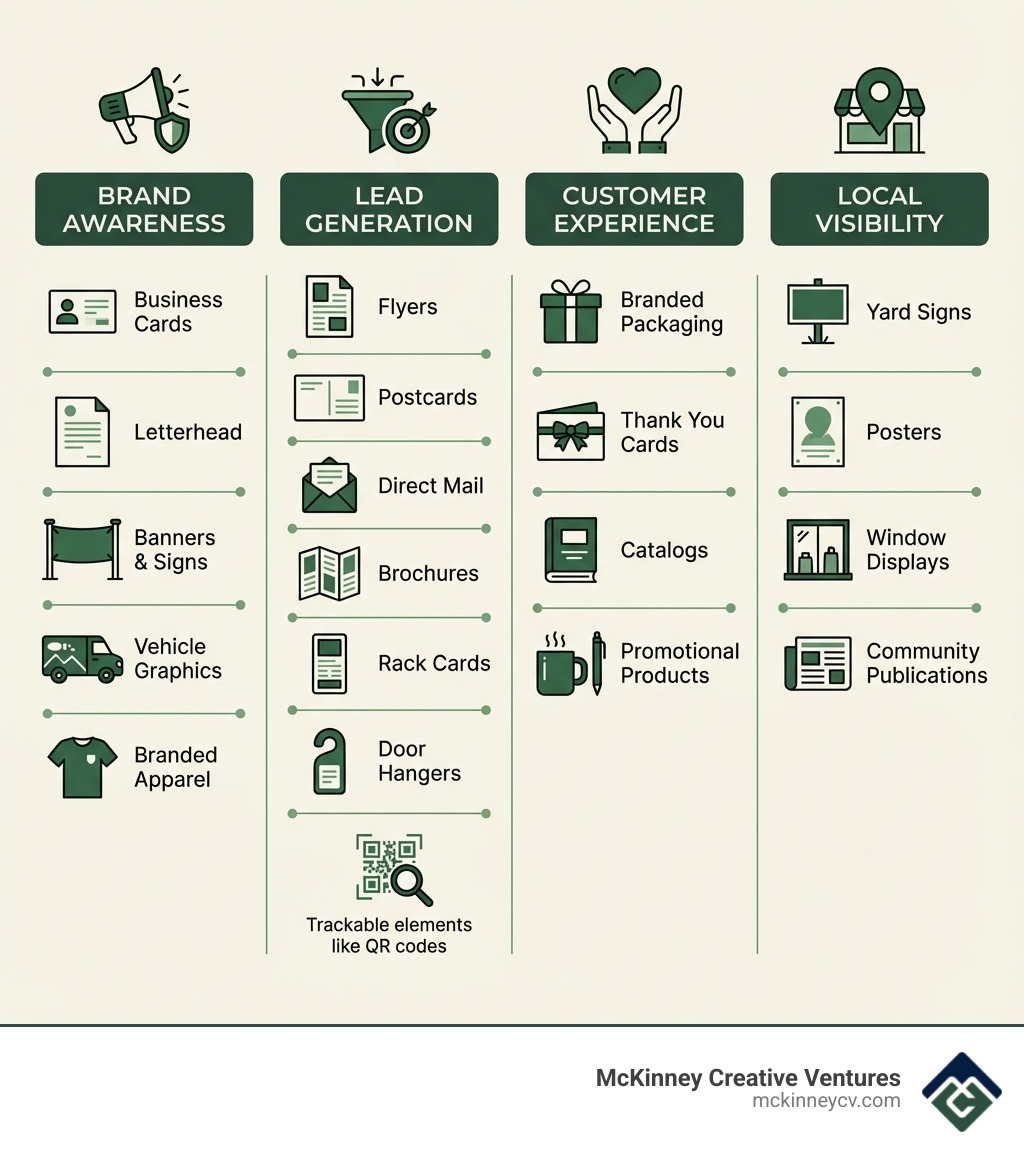
Print marketing materials examples include business cards, postcards, flyers, brochures, banners, vehicle graphics, branded packaging, promotional products, and stationery. These physical marketing tools create tangible connections with customers and complement digital strategies effectively.
Common Print Marketing Materials by Purpose:
Business Goal Print Materials Brand Awareness Business cards, letterhead, banners, vehicle wraps, branded apparel Lead Generation Flyers, postcards, direct mail, brochures, rack cards, door hangers Customer Experience Product packaging, thank you cards, catalogs, promotional products Local Visibility Yard signs, posters, window displays, community publications
Digital marketing dominates today's landscape. But print marketing has not disappeared. It has evolved into a strategic tool that works alongside your online efforts.
A handwritten letter in the mailbox stands out as remarkable. A well designed business card or brochure feels valuable and professional in a way that digital often cannot capture. Print materials offer something digital ads do not: physical presence.
For every 2,000 business cards a business hands out, sales can increase by 2.5%. That tangible connection matters. Print creates trust through physical interaction. It cuts through the noise of hundreds of daily emails and thousands of digital ads.
For local businesses serving the East Metro and St. Croix Valley, print is especially practical. Direct mail reaches specific neighborhoods. Flyers and postcards land directly in the hands of potential customers. Print connects you with a local audience in ways digital sometimes cannot.
The key is not choosing print over digital. It is building a marketing system where both work together. Print drives people online through QR codes and custom URLs. Digital reinforces the credibility you build through professional print materials.
I am Sam McKinney, founder of McKinney Creative Ventures. Over 15 years of marketing strategy work, I have helped dozens of service based businesses develop integrated marketing systems that include effective print marketing materials examples custom to their specific goals. The businesses that succeed are the ones that stop thinking in individual tactics and start building complete systems.
The Lasting Impact of a Physical Connection
A well designed brochure or a high quality business card feels valuable and professional in a way a fleeting digital ad cannot. It shows you have invested in your brand. This physical presence helps build credibility and leaves a lasting impression, making your business more memorable to potential customers in the East Metro and St. Croix Valley.
Poorly designed marketing materials on low quality paper reflect negatively on your brand, turning off potential customers. The inverse is also true. Quality print materials signal that you take your business seriously. They convey professionalism and a commitment to excellence that resonates with clients. We find that when a client receives a tangible, well-crafted piece from your business, it often stands out against the backdrop of digital overload. It becomes a physical reminder of your brand, something they can hold, refer to, and remember.
Reaching Your Local Audience Effectively
For businesses that serve a specific geographic area, print is a practical tool. Direct mail, local flyers, and community publications put your brand directly into the hands of the people most likely to become your customers. It is a focused approach that works alongside your digital strategy.
Print is the way to go if you mainly connect with local audiences. For many businesses in the Greater Twin Cities Metro and St. Croix Valley areas, from Woodbury to Hudson, reaching local customers is paramount. We see this with service-based businesses, local retailers, and community organizations.
For tangible products, opting for branded print packaging is a key way to improve your relationship with buyers. Imagine the experience of opening a carefully packaged product from a local artisan in Stillwater or a specialty food shop in Afton. That unboxing experience, improved by quality branding, builds loyalty. For increasing in store sales, postcards with clip out coupons are one great option. These can be particularly effective for shops in Maplewood or Cottage Grove looking to drive foot traffic.
A Strategic Guide to Print Marketing Materials Examples
This section breaks down different print materials by their primary business goal. Choosing the right tool for the job is the first step in building a marketing system that delivers real results. As your fractional marketing team, we always emphasize strategy before tactics. Understanding the purpose of each print material helps us build a cohesive plan for your business.
For Building Brand Awareness and Making a First Impression
When you are looking to establish your presence or reinforce your brand identity, certain print materials excel. These are the tools that get your name recognized and remembered.
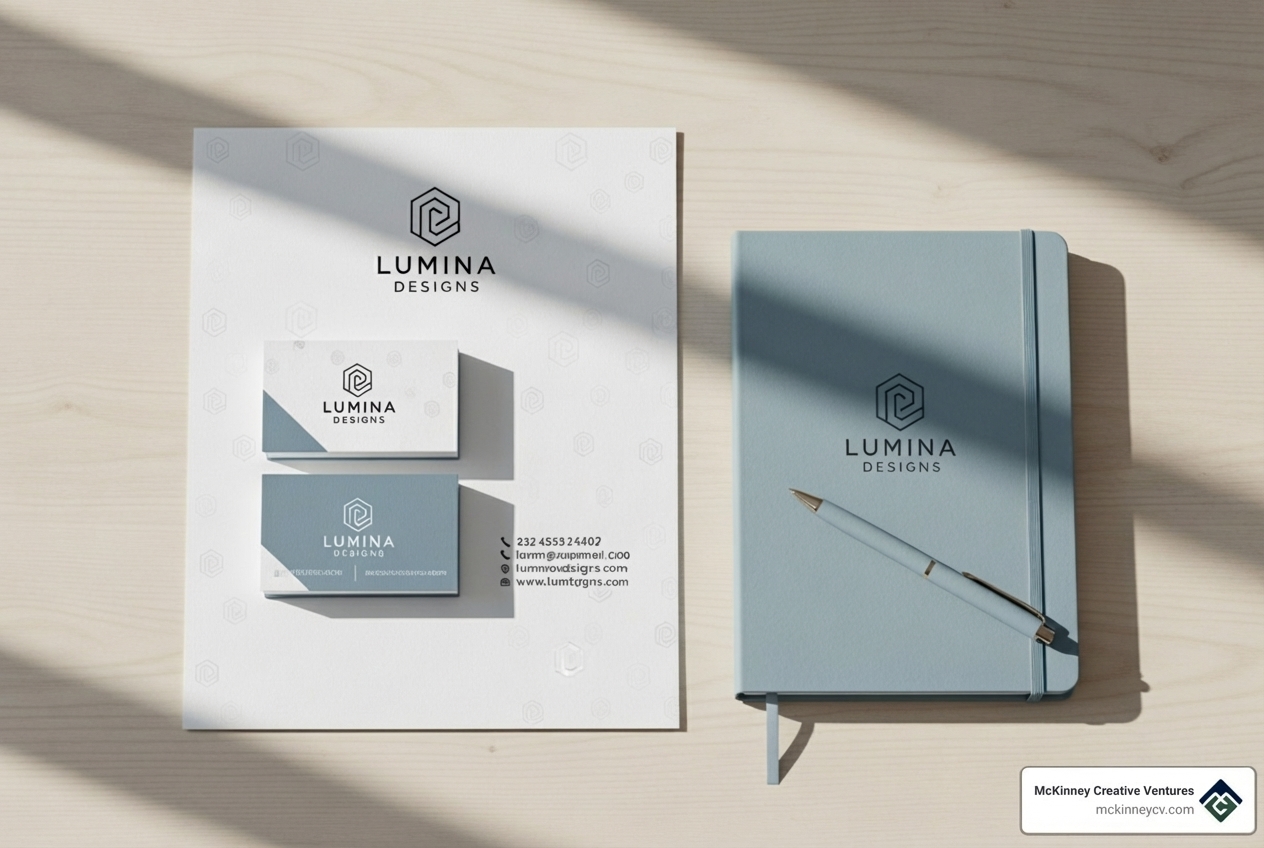
Business Cards: These are fundamental networking tools. For every 2,000 business cards a business hands out, sales can increase by 2.5%. They add legitimacy and professionalism to your interactions, especially at local events in places like Lake Elmo or Stillwater. A well-designed card is a mini billboard for your brand, compact and lightweight for easy distribution.
Stationery (Letterhead and Envelopes): Branded stationery makes your business communications distinct and memorable. Whether it is a formal proposal or a thank you note, custom letterhead and envelopes lift your brand's image, even when the communication is not directly sales-focused. It reinforces your professional identity in every interaction.
Branded Apparel: T-shirts, hats, and tote bags are popular for a reason: people like them! Giving away branded items like a reusable tote bag at a community fair in Hudson or a branded hat at a local sports event in Oakdale turns your customers into walking advertisements. Tote bags are particularly effective because they can be used over and over again, promoting your brand's eco-friendly message if that aligns with your values.
Vehicle Graphics: Your company vehicle can be a powerful mobile billboard. Applying vehicle wraps with your business contact information and services ensures your brand is seen by thousands of potential customers every day as you drive through Minneapolis, St. Paul, or even smaller towns like Bayport. Mobile advertising via vehicle graphics is incredibly effective for driving traffic and converting leads, especially for service businesses like contractors or landscapers.
Banners and Signs: These are essential for announcing your presence, promoting events, or highlighting special offers. Think of a durable banner for a grand opening in Roseville, or a yard sign for a local real estate agent in Grant. Yard signs, in particular, are effective for marketing small businesses to passersby, acting like small, localized billboards. For businesses in the East Metro, durable outdoor signage can attract attention from busy roads and storefronts.
For Generating Leads and Driving Direct Action
Once you have established awareness, the next step is to encourage potential customers to take action. These print materials are designed to capture interest and convert it into a measurable response.
Flyers: Versatile and often low-cost, flyers can drive a high return on investment. They are excellent for promoting specific offers, events, or services. We often recommend incorporating QR codes on flyers to bridge print and digital marketing, directing customers to a specific landing page or social media profile. Flyers can be distributed at local businesses, community centers, or handed out at events in areas like River Falls or New Richmond.
Postcards: Handy for direct mail campaigns, postcards need to be eye-catching and instantly recognizable as your brand. For increasing in-store sales, postcards with clip-out coupons are a great option. They can also be used for appointment reminders, special announcements, or even just a friendly touchpoint with your customer base in Eagan or Bloomington.
Direct Mail: This involves sending promotional materials directly to target households or businesses. Campaigns can be highly personalized and specific, especially when using tools like the USPS's Every Door Direct Mail program. We ensure these campaigns are measurable by including special trackable URLs, dedicated phone numbers, or unique discount codes, allowing us to see direct results and calculate ROI.
Brochures: When you have more detailed information to convey than a flyer or postcard allows, brochures are your go-to. They are ideal for showcasing all types of products and services, providing in-depth descriptions, pricing, and benefits. A tri-fold brochure at a trade show in St. Paul or in your waiting room in Shoreview can effectively inform and persuade potential clients.
Rack Cards: These are typically slim, vertical cards designed to fit into display racks, commonly found in tourist centers, hotels, or partner businesses. They offer quick, digestible information about your services or products, making them effective for capturing attention in high-traffic areas, such as visitor centers in the St. Croix Valley.
QR Codes: Integrating QR codes into your printed materials is a powerful way to link the physical to the digital. Customers can scan the code to visit your website, view a video, sign up for a newsletter, or access a special offer. This makes your print materials interactive and measurable.
Trackable URLs and Unique Discount Codes: To truly measure the effectiveness of your print campaigns, we embed trackable elements. A unique URL for a specific campaign or a discount code only valid with a printed coupon allows us to accurately attribute leads and sales back to your print efforts.
For Enhancing the Customer Experience and Fostering Loyalty
Building a loyal customer base means going beyond the transaction. These print materials help create memorable experiences and reinforce your brand's commitment to quality and customer satisfaction.
Product Packaging: For businesses selling tangible products, branded print packaging is a critical marketing material. It improves the unboxing experience, tells your brand story, and reinforces product benefits. Imagine receiving a product from a local business in Stillwater or Hudson in beautifully designed, branded packaging. That attention to detail lifts the entire customer experience and makes them feel valued.
Branded Bags: Whether it is a shopping bag for a retail store in White Bear Lake or a gift bag for a corporate client in Minneapolis, branded bags continue your brand's presence beyond the point of purchase. They also offer a practical utility that customers appreciate.
Catalogs: For businesses with a wide range of products or services, a well-designed catalog provides a comprehensive overview. It allows customers to browse at their leisure, showcasing your offerings in a professional and engaging format. High-quality product catalogs can be a powerful sales tool, especially for businesses in areas like Richmond, MN.
Thank You Cards: A personalized, handwritten (or well-printed) thank you card can go a long way in building customer loyalty. It is a simple, yet powerful, gesture that shows appreciation and reinforces the human connection behind your business.
Promotional Products (Swag): Branded goods like pens, notebooks, keychains, or even high-quality mugs are excellent for corporate gifting and creating memorable brand experiences. The most effective swag items are those the recipient will actually use, keeping your brand top-of-mind in their daily lives. We help businesses in places like Landfall and Pine Springs choose promotional products that align with their brand and resonate with their audience.
Designing and Measuring Your Print Campaign for Maximum ROI
A successful print campaign is more than just a good design. It requires a strategic approach to both creation and measurement to ensure your investment is working for you. As your fractional marketing team, we focus on systems that deliver measurable results, not just pretty pictures.
Key Considerations for Effective Print Marketing Materials
When we design print marketing materials for our clients in the East Metro and St. Croix Valley, we keep several critical factors in mind:
Design Consistency: Your print materials must align with your overall brand identity. This means using consistent logos, colors, fonts, and imagery across all your marketing channels, both print and digital. A cohesive look builds recognition and trust.
Clear Messaging: What is the core message you want to convey? Keep it concise, compelling, and easy to understand. For signs and banners, the copy needs to be short and punchy, as people are often on the move. For brochures, you can dig deeper, but clarity remains paramount.
Strong Call-to-Action (CTA): Every piece of print marketing should guide the recipient to a next step. Whether it is "Visit our website," "Call for a free consultation," or "Redeem this coupon," a clear CTA is essential for driving action.
Paper Quality and Finish: This is where tangibility truly shines. Poorly designed marketing materials on low-quality paper reflect negatively on your brand. Investing in a small collection of quality print marketing collateral is far better than a huge quantity of cheap, flimsy items. Consider finishes like matte, gloss, or even pearlescent for flyers to make them stand out.
Target Audience Alignment: Who are you trying to reach? Your design, messaging, and even the type of print material should be custom to resonate with your ideal customer. A flyer for a youth sports league in Cottage Grove will look different from a brochure for a financial advisor in St. Paul.
Brand Voice: Does the tone of your print material match your brand's personality? Whether it is professional, playful, informative, or bold, ensure consistency in your written copy.
Proofreading: A small typo can undermine your credibility. Always proofread carefully before printing. We always ensure multiple sets of eyes review content before it goes to print.
How to Measure the Success of Your Print Campaigns
One of the most common questions we get is about measuring print marketing ROI. While it can feel less direct than digital analytics, there are robust ways to track performance:
QR Code Scans: By creating unique QR codes for each print campaign, we can track how many times they are scanned and even where those scans lead (e.g., a specific landing page).
Custom URLs: Direct recipients to a unique URL (e.g., yourwebsite.com/specialoffer). This allows us to see how much traffic and conversion originated from that specific print piece.
Dedicated Phone Numbers: Assign a unique phone number to a print campaign. This is particularly effective for direct mail or local advertising in areas like Woodbury or Inver Grove Heights, allowing you to track inbound calls generated by that specific effort.
Unique Discount Codes: As mentioned with postcards, unique discount codes help attribute sales directly to the print material that carried them.
In-Store Coupons: Track the redemption rates of physical coupons. This provides clear data on how many customers were driven into your physical location by the print campaign.
Asking Customers Directly: Train your staff to ask new customers how they heard about your business. This qualitative data can provide valuable insights, especially for local businesses.
Tracking Leads in a CRM: For service-based businesses, ensure any leads generated through print materials are logged in your Customer Relationship Management (CRM) system, noting the source. This helps us track the entire customer journey and calculate the true ROI.
Integrating Print and Digital for a Cohesive Marketing System
In today's marketing landscape, print and digital are not competing channels; they are complementary. The most successful businesses create a seamless system where each channel supports the other, building a unified and strong brand presence. Our approach is always to integrate, not isolate, your marketing efforts.
Creating a Unified Customer Journey
Imagine a potential client in Hudson, WI, first seeing your vehicle graphics, then receiving a direct mail postcard, and finally visiting your website. Each touchpoint should feel like it belongs to the same brand.
Consistent Branding Across Channels: This is non-negotiable. Your logo, color palette, typography, and brand voice must be consistent whether someone encounters your business on a flyer, a social media post, or your website. This consistency builds trust and reinforces your identity.
Using Print to Drive Online Traffic: Print materials are excellent at prompting online engagement. A flyer with a QR code leading to your latest blog post, or a business card listing your social media handles, effectively guides customers from the physical to the digital field.
Promoting Social Media on Print Materials: Make it easy for customers to connect with you online. Include your social media handles on business cards, brochures, and even packaging. This encourages engagement and builds your online community.
Building an Integrated Marketing Plan: Print advertising isn’t dead—but it is different. Gone are the days when you could rely totally on newspaper advertising and direct mail to successfully market your business. However, print marketing is still relevant today and can be incredibly effective when combined with your digital advertising strategy. We help our clients build comprehensive plans where print and digital work hand-in-hand.
Practical Examples of Print and Digital Integration
A postcard with a QR code linking to a specific landing page: Imagine a local restaurant in Stillwater sending out postcards with a QR code that takes customers directly to their online menu or a reservation page. This streamlines the customer journey from interest to action.
A business card that lists social media handles: A professional in St. Paul networking at an event hands out a business card that includes their LinkedIn profile or Instagram handle, allowing new contacts to easily connect online.
A direct mail piece that promotes an upcoming event or offer: A fitness studio in Woodbury sends a mailer announcing a new class, with a unique URL to sign up online and a special discount code for early birds.
A catalog that drives traffic to an e-commerce site: A specialty retailer in Afton distributes a beautifully designed print catalog that features product highlights and directs customers to their website for the full collection and online purchasing.
Frequently Asked Questions about Print Marketing
We often get asked specific questions about how to best leverage print marketing. Here are some of the most common inquiries from businesses in our local service areas.
How do I choose the right print materials for my industry?
The best materials depend on how you interact with customers and what your primary business goals are. A service business like a contractor operating in the East Metro might get great results from door hangers in targeted neighborhoods and highly visible yard signs at job sites. A professional consultant in Minneapolis or St. Paul will need high-quality business cards, presentation folders, and potentially well-crafted brochures to convey expertise. A retail shop in Stillwater or Hudson should focus on in-store signage, branded bags for purchases, and direct mail postcards with special offers to drive foot traffic.
Think about your customer's journey and where a physical touchpoint makes the most sense. Do they need something to hold onto? Do they need detailed information? Are you trying to reach them at their home or when they are out and about? Answering these questions helps us pinpoint the most effective print marketing materials examples for your specific needs.
What are the latest trends in print marketing design?
Current trends in print marketing design focus on minimalism, bold typography, and sustainable materials. We see a lot of clean layouts that prioritize readability and impact. Unique finishes like spot UV (a glossy coating on specific areas), embossing (raised designs), or die-cuts (custom shapes) are also popular for making a piece stand out and adding a tactile element. Integrating QR codes is now a standard practice for connecting print and digital, making print pieces interactive. We are also seeing a resurgence in the appreciation for high-quality paper stocks and unique textures that improve the sensory experience.
How much should a small business budget for print marketing?
There is no single answer to this, as it depends entirely on your specific goals and overall marketing budget. Instead of focusing on a random dollar amount, we recommend starting with a specific, measurable goal. For example, if you want to generate 20 new leads from a local neighborhood in Cottage Grove or Oakdale, we would calculate the cost of a targeted postcard campaign designed to achieve that goal. This ROI-focused approach ensures you are investing strategically, rather than just spending money on print for print's sake. We help you understand the potential return on investment for each print marketing effort.
Build a Marketing System That Works
Print marketing materials examples are a vital part of a comprehensive marketing strategy. They offer a unique ability to build trust and create tangible connections with your audience. When thoughtfully designed and integrated with your digital efforts, they do more than just advertise. They build relationships and drive sustainable growth for your business. In a world saturated with digital messaging, the tactile, enduring nature of print can be your competitive advantage.
At McKinney Creative Ventures, we help small businesses in the East Metro and St. Croix Valley develop and manage complete marketing systems that deliver consistent results. We believe in strategy first, ensuring every marketing dollar you spend, whether on print or digital, is working hard for your business. If you are ready to move beyond one-off efforts and build a strategy that works, we are here to help.